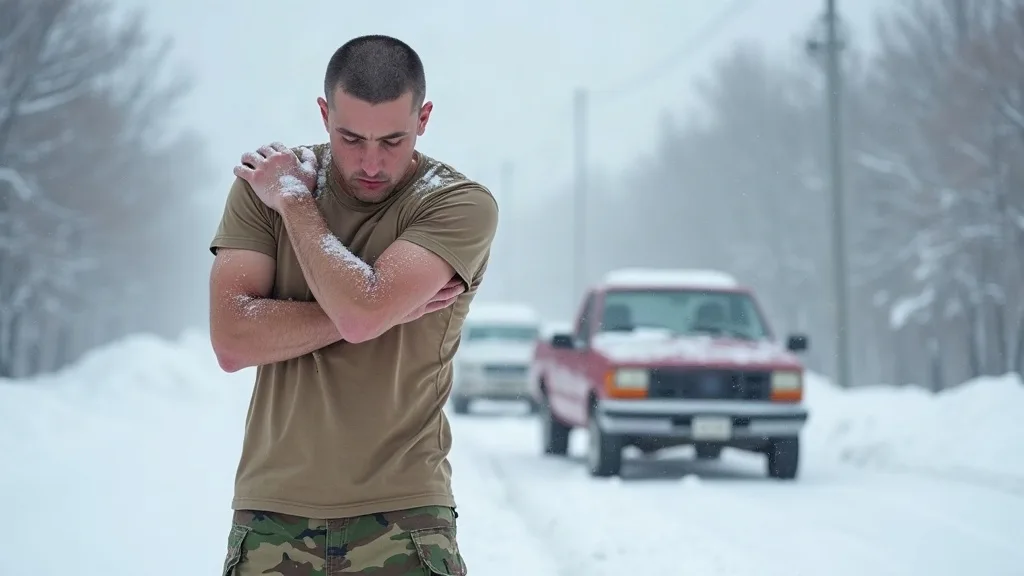
 Illustration
Your first North Country winter: a survival guide for Fort Drum soldiers from the South
Never driven on snow, owned a snow blower or felt a February morning at Fort Drum? Here's what to wear, what to keep in your car and how to get through your first lake-effect winter.
If you just reported to Fort Drum from Fort Bragg, Fort Hood, Fort Benning or anywhere else where "cold" means a light jacket in January, welcome to the North Country. You're about to experience a winter unlike anything most of the country ever sees.
Every fall, thousands of soldiers and their families arrive at the home of the 10th Mountain Division having never driven on snow, never owned a snow blower and never stood at a bus stop when it's below zero. Plenty of them have never heard of snow tires. That's not a criticism. Where they came from, nobody needed to know.
The good news: North Country winters are very manageable once you know what you're doing, and the people who live here do it every year. Here is what you need to know before the first big storm, from what to wear and what to keep in your car to how to find out if post is on a delay.
How cold does it actually get at Fort Drum?
Colder than most newcomers expect. National Weather Service climate normals for nearby Watertown put the average February high at about 31 degrees and the average February low at about 11 degrees. Those are averages; cold snaps regularly push overnight temperatures below zero, and the wind can make it feel far colder.
Then there's the snow. Fort Drum sits just east of Lake Ontario, in one of the most active lake-effect snow belts in the country. Bands of snow can come off the lake and drop several inches an hour on one town while the next town over sees sunshine. The Tug Hill Plateau, just southeast of post, averages more than 200 inches of snow a winter, and the National Weather Service in Buffalo says five-foot storms there happen about once every year or two.
Winter here also starts early and stays late. Snow can fly in October or November and linger into April. Plan for a long season, not a few bad weeks.
What kind of winter clothes do I need?
Think layers, not one giant coat. A base layer that wicks sweat (synthetic or wool, not cotton), an insulating middle layer like fleece or a down vest, and a windproof, waterproof outer shell will keep you warmer and more flexible than any single jacket. Cotton holds moisture and pulls heat away from your body, which is why "cotton kills" is a saying up here.
Cover your extremities. A warm hat, a neck gaiter or scarf, insulated gloves or mittens (mittens are warmer), wool socks and insulated, waterproof boots with real traction are essentials, not extras. Your ears, fingers, toes and face are where frostbite starts.
The Army issues cold-weather gear for duty, but you still need your own for everything else: the commute, shoveling the driveway, walking the dog and taking the kids to the bus stop. Quality winter gear doesn't have to be expensive. Fort Drum's Army Community Service has long pointed newcomers to the Fort Drum Thrift Shop for coats, boots, snow pants, mittens and shovels; call (315) 772-7189 for current hours. Buy kids' coats and snow pants early, because they sell out.
Do I need snow tires at Fort Drum?
New York doesn't require them, but if you're driving a car that came up from the South on all-season or summer tires, winter tires are one of the best investments you can make. Their rubber stays soft in freezing temperatures and their tread is designed to bite into snow and slush, so they help you stop and turn when all-season tires start to slide.
Studded snow tires are legal in New York from Oct. 16 through April 30. Many North Country drivers keep a second set of wheels with winter tires and swap them in late October or early November, before the first real storm, when local tire shops get busy.
Four-wheel or all-wheel drive helps you get going, but it does not help you stop. Good tires do.
How do I get my car ready for a North Country winter?
Have your battery tested before the cold arrives; a weak battery that starts fine in September may not start on a zero-degree morning. Switch to winter windshield washer fluid rated well below zero, because summer fluid will freeze. Consider winter or all-weather wiper blades, which are less likely to freeze to the glass.
Keep your gas tank at least half full all winter. If traffic stops or you slide off the road, you'll have fuel to keep the engine running and stay warm until help arrives.
Clear all of the snow and ice off your vehicle before you drive, not just a little window to peek through. Fort Drum's Army Community Service has warned newcomers that gate guards will stop these "peephole drivers" and have them clear the whole windshield. Brush the roof too, so snow doesn't slide down over your windshield or blow onto the car behind you.
What should I do if I get stuck in the snow?
Stay with your vehicle unless you can see a safe place close by. Your car is shelter, and it's much easier for rescuers to find than a person walking in a whiteout. Call 911 if you're in danger or blocking traffic.
If you run the engine for heat, make sure the exhaust pipe is clear of snow first, and crack a window. A buried tailpipe can fill the car with carbon monoxide, which you can't see or smell. Run the engine in short stretches rather than nonstop, and turn on your hazard lights or dome light so you can be seen.
Use the sand or kitty litter under your drive wheels for traction, and don't spin the tires; that just digs you in deeper.
How do I drive on snow and ice?
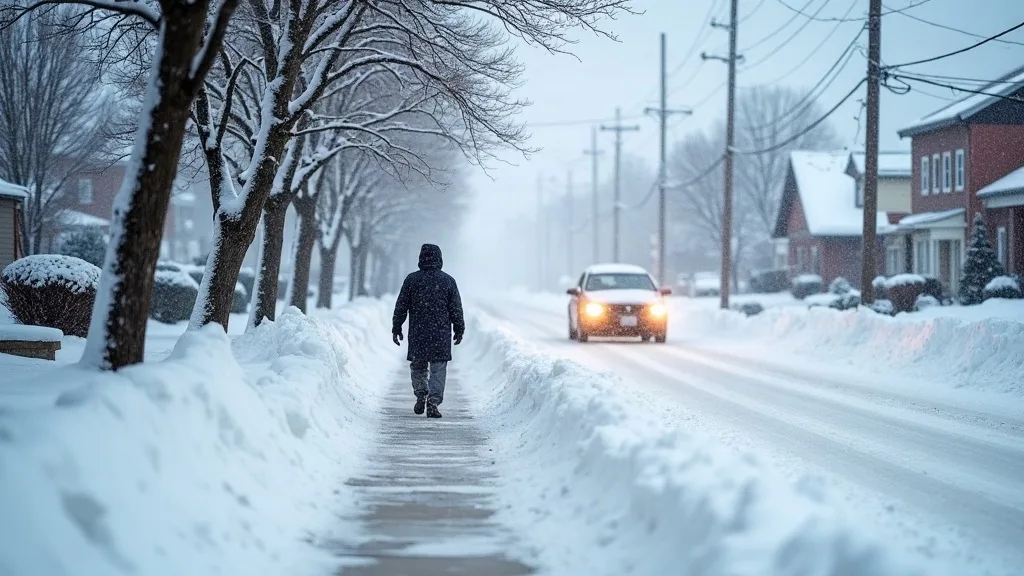
Slow down, and give yourself far more room and time than you think you need. Fort Drum's Army Community Service puts it simply: triple your following distance and triple your driving time. A 30-minute summer commute can easily take an hour or more after a storm.
Accelerate and brake gently, stay in the plowed lanes, and avoid sudden turns. If the back end starts to slide, ease off the gas and steer in the direction you want the car to go. Bridges, overpasses and shaded spots freeze first, and black ice can look like a wet road.
Give snowplows plenty of room and never pass one on the right. Before you head out, check road conditions on 511NY (511ny.org).
How do I use a snow blower safely?
If you've never used one, read the manual first and take your time. Add fuel outside with the engine off and cool, and never run a snow blower in a closed garage, because the exhaust carries carbon monoxide.
The most important rule: never clear a clogged chute or auger with your hands, even with the engine off. Use the clearing tool or a broom handle. Most snow blower hand injuries happen exactly that way. Wear eye protection and boots with good grip, and clear your driveway of newspapers, toys and hoses before the snow piles up.
Fort Drum's Garrison Safety Office has offered a Snow Blower Operation Course alongside its Winter Driving Course for soldiers, family members and Army civilians. Call the office at (315) 772-0310 to ask about current dates. Shoveling by hand? Push the snow rather than lifting it, take breaks, and remember that heavy, wet snow is hard on the heart.
How will I know if Fort Drum is on a weather delay?
Sign up for the Alert! system. Soldiers, Department of Defense employees and contractors can register themselves and up to 10 family members from a government computer at alertservices.csd.disa.mil. Fort Drum's emergency manager recommends text messages. Alert! calls come from (703) 454-0563, not a 315 number, so don't write them off as spam.
You can also call the Fort Drum Information Hotline at (315) 772-DRUM (3786) for weather calls and road conditions, check home.army.mil/drum, or follow the installation's Facebook page. Weather-call decisions are typically made in the middle of the night, with a delay or cancellation going out early in the morning, and Fort Drum's decision is made separately from local school districts.
What cold-weather injuries should I watch for?
Frostbite can set in fast on exposed skin in bitter cold and wind. Early signs are numbness and skin that turns white, gray or waxy, usually on fingers, toes, ears, nose and cheeks. Get indoors and warm the area gradually; don't rub it.
Hypothermia starts with uncontrollable shivering and can move to confusion, slurred speech and drowsiness. If someone shows those signs, get them warm and call 911.
And drink water. Fort Drum's newcomer winter classes have noted that people get dehydrated more easily in winter, partly because nobody wants cold water when it's 5 degrees outside.
Can a North Country winter actually be fun?
Absolutely, and the soldiers and families who enjoy it most are the ones who get outside. Thompson Park in Watertown is a local favorite for sledding and snow tubing, and Dry Hill Ski Area just outside Watertown offers skiing, snowboarding and tubing.
Fort Drum's Outdoor Recreation program rents winter gear, which is a smart way to try snowshoeing, skiing or ice skating before you buy anything. Ask about lessons if you've never done it. A first North Country winter is a lot easier to love when it's something to do, not just something to survive.
Where did you live before Fort Drum?
0 votes · tap to vote
What's your best tip for a soldier's first North Country winter?
Been through a few winters up here? Share the one thing you wish someone had told you. We'll add the best tips to this guide.
Common questions
- How cold does it get at Fort Drum in winter?
- Very cold. National Weather Service normals for nearby Watertown put the average February low at about 11 degrees, and cold snaps regularly drop overnight temperatures below zero. Wind makes it feel colder, so plan for real winter gear, not a light jacket.
- How much snow does Fort Drum get?
- A lot, and it varies by location. Fort Drum is in the lake-effect snow belt east of Lake Ontario, and the Tug Hill Plateau just southeast of post averages more than 200 inches a winter. Snow can start in October or November and last into April.
- Do I need snow tires to live at Fort Drum?
- They aren't required by New York law, but they're strongly recommended, especially for cars coming from the South on all-season tires. Winter tires grip and stop far better in snow and cold. Studded tires are legal in New York from Oct. 16 through April 30.
- What should I keep in my car for a Fort Drum winter?
- A snow brush and scraper, small shovel, sand or kitty litter, a blanket with spare hat, mittens and socks, flashlight, phone charger, jumper cables, reflective vest or hazard triangle, first aid kit, water and snacks. Keep your gas tank at least half full.
- How do I find out if Fort Drum has a weather delay?
- Register for the Alert! system and choose text messages; calls come from (703) 454-0563. You can also call the Fort Drum Information Hotline at (315) 772-DRUM (3786), check home.army.mil/drum or follow Fort Drum on Facebook. Fort Drum's decision is separate from local schools.
- Where can I buy affordable winter clothes near Fort Drum?
- The Fort Drum Thrift Shop has long been a go-to for coats, boots, snow pants and mittens; call (315) 772-7189 for hours. Shop early in the fall, because children's winter gear sells out quickly.
- Is there a winter driving class at Fort Drum?
- Fort Drum's Garrison Safety Office has offered a Winter Driving Course and a Snow Blower Operation Course for soldiers, family members and Army civilians, and Army Community Service has run winter preparation classes for newcomers. Call the Safety Office at (315) 772-0310 or ACS at (315) 772-7902 for current dates.
- What do I do if my car gets stuck in the snow?
- Stay with the vehicle, call 911 if you're in danger, and turn on your hazards. Before running the engine for heat, clear snow away from the exhaust pipe and crack a window to prevent carbon monoxide poisoning. Use sand or kitty litter under the tires instead of spinning them.
More from ClickNNY
Tell us what we missed
Know something North Country readers should hear about this? Send the ClickNNY desk a local tip, a correction or a photo.