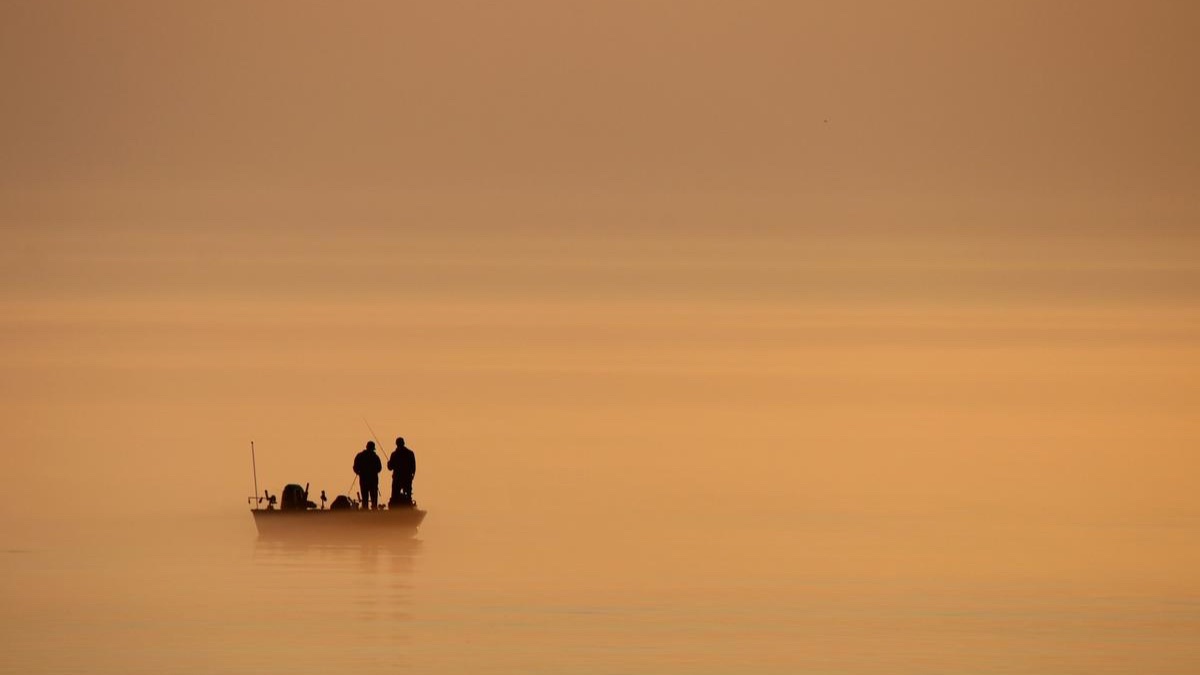
Fishing the St. Lawrence River after summer: a fall and ice fishing guide to the Thousand Islands
When the tour boats leave, the St. Lawrence becomes a different river. Here's what's biting in the fall, how ice fishing works, exactly what to bring, how to stay safe, and where to stay, whether you're visiting for the first time or have lived here all your life.
Ask most people about the St. Lawrence River and they picture July: tour boats circling Boldt Castle, the bays crowded with cruisers, and every dock in Alexandria Bay full. That river is real, and it's wonderful. It's also only one season of it.
Come back in October and it feels like a different place. The summer crowds have gone home, the shoreline maples turn red and gold against the dark granite of the islands, and the water goes cold and clear. The fish notice. Muskellunge, the river's biggest predator, start feeding hard before winter. Pike and walleye move up onto the shoals. On a gray, windy morning you can run for miles past empty cottages and see nobody but a heron and maybe one other boat.
Then, sometime around January, the sheltered bays lock up with ice and the river changes again. Shanties go up. Smoke drifts out of little stovepipes. Bald eagles that came down from Canada perch over the open channels. Families sit on buckets over a hole in the ice and pull up yellow perch for a fish fry.
This guide is for both kinds of reader: the visitor who has never set foot on frozen water and wants to know what all this is about, and the North Country local who has driven past the shanties for years and is finally ready to try it. It covers what's biting in fall, how ice fishing actually works, exactly what to bring, how to stay safe, the licenses and rules, and where to stay. Every resource is linked, so you can click straight through to what you need.
Why is the St. Lawrence River such a good place to fish?
The stretch of river most people mean by "the Thousand Islands" runs roughly from Cape Vincent, where Lake Ontario drains into the St. Lawrence, downstream to about Morristown. In between are more than a thousand islands, plus countless shoals, weed beds, rocky drop-offs and back bays. That variety of structure, in clean, moving water, is why the river holds so many different fish.
Its reputation isn't just local pride. In September 2022, Bassmaster Magazine ranked the St. Lawrence River at the Thousand Islands as the best bass "lake" in the country. And bass are only the start. The river is classic water for smallmouth and largemouth bass, northern pike, walleye, yellow perch and panfish, and it has been famous musky water for generations. Lake sturgeon, a fish that looks unchanged since the age of dinosaurs, are making a slow comeback here too. They're protected, so you look and release.
One more thing makes the river unusual: it's an international border. The middle of the channel is the line between New York and Ontario, so where you fish decides which license you need. More on that below.
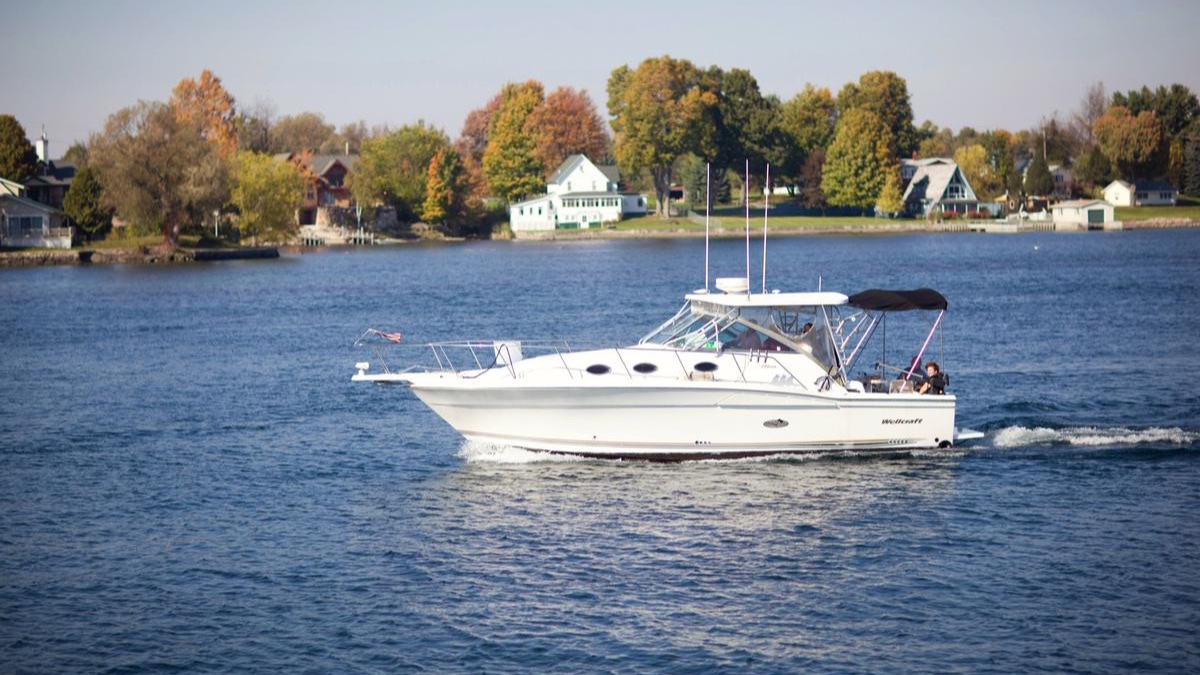
What can you catch in the St. Lawrence River in the fall?
Fall is when serious anglers come back to the river, and it's an easy sell for everyone else, too. The water is cooling, fish are feeding to put on weight before winter, and the scenery is at its best.
Muskellunge. Musky are the headliner. These fish can grow past 50 inches, and they're known as the "fish of ten thousand casts" because they are so hard to catch. October and November are when the biggest fish of the year are usually caught. On the New York side of the St. Lawrence, a musky must be at least 54 inches long to keep, and the limit is one a day, so almost every musky is photographed and released. Plenty of fall musky anglers troll rather than cast, because trolling covers more water along the drop-offs where musky hunt.
Northern pike and walleye. Both bite well from October into November. Pike patrol the weed edges and hit hard; walleye feed best in low light, at dawn and dusk and on cloudy days, and they're about the best-eating fish in fresh water. On the St. Lawrence, pike must be 22 inches and walleye 18 inches to keep, with a limit of three of each per day. Check the current DEC rules before you go, since sizes and seasons can change.
Yellow perch. September and October are good perch months, and perch are perfect for kids and beginners: they travel in schools, they bite readily, and they're delicious. Perch are open all year.
Smallmouth bass. The fish the river is famous for keeps biting into the fall. A late-season smallmouth on light tackle, jumping beside an island ablaze with fall color, is about as good as freshwater fishing gets.
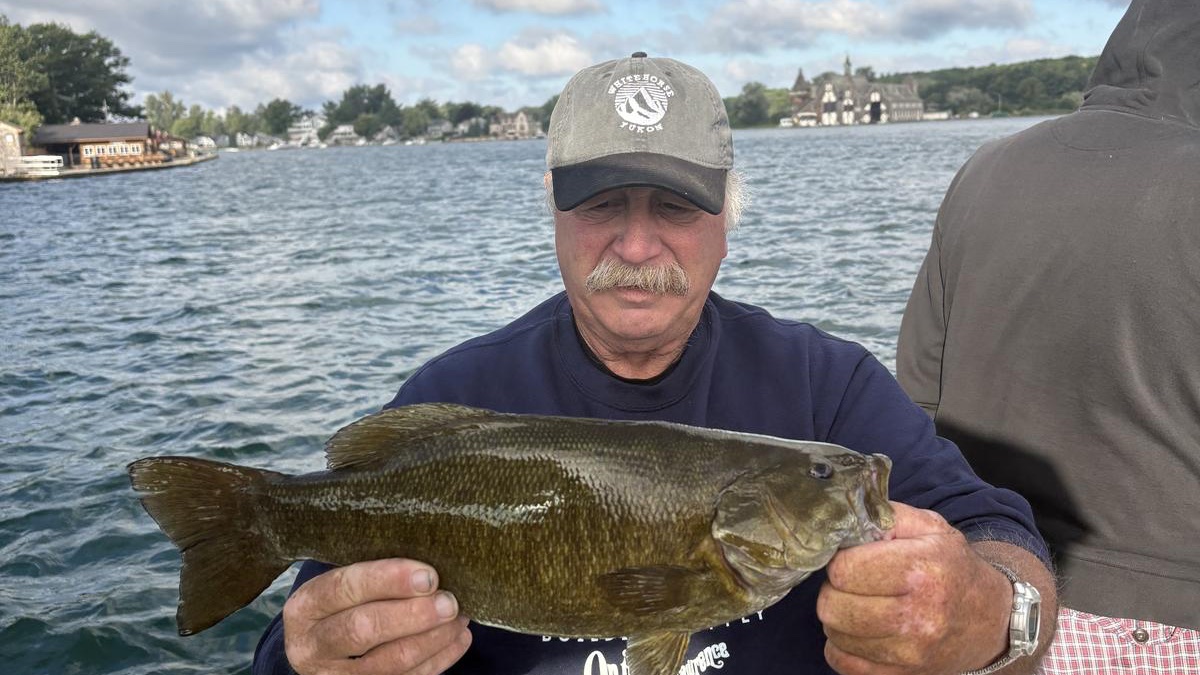
Should I hire a fishing guide on the St. Lawrence?
If it's your first time on the river, or your first time fishing at all, a guide is the fastest way to a good day. The river is big, the structure is complicated, and the fish move with the seasons. A local guide knows which shoal is holding fish this week, brings all the gear, and handles the parts that frustrate beginners.
Alexandria Bay has a long guiding tradition. Back in the late 1800s, river guides rowed their guests out in skiffs, fished all morning, then pulled up on an island and cooked the catch over an open fire. That custom, the Thousand Islands shore dinner, is still alive today. Local legend even says Thousand Island dressing was first mixed up for those guides' shore dinners, long before it reached the big-city hotels.
One guide carrying that tradition forward is Capt. Richard Drake of Laurentian Tours, who runs trips out of Bonnie Castle Marina in Alexandria Bay. Drake has been running boats on the St. Lawrence since he was 18. He started as a kid working the deck for a local fishing guide, spent ten years captaining for Uncle Sam Boat Tours, and now runs his own charters. He's a U.S. Coast Guard licensed captain, a New York State licensed guide, and a member of the Alexandria Bay Fishing Guides Association.
What makes his operation a good fit for this guide is that he works all four seasons: summer bass and pike, fall musky trips, guided duck hunts, and winter ice fishing with a heated shanty. Most of his customers have never been on a charter before. He rigs the rods, coaches you through the fight, nets the fish, and cleans and bags your keepers at the end of the day. Pricing is per boat, not per person, for up to six people, and he doesn't take deposits.
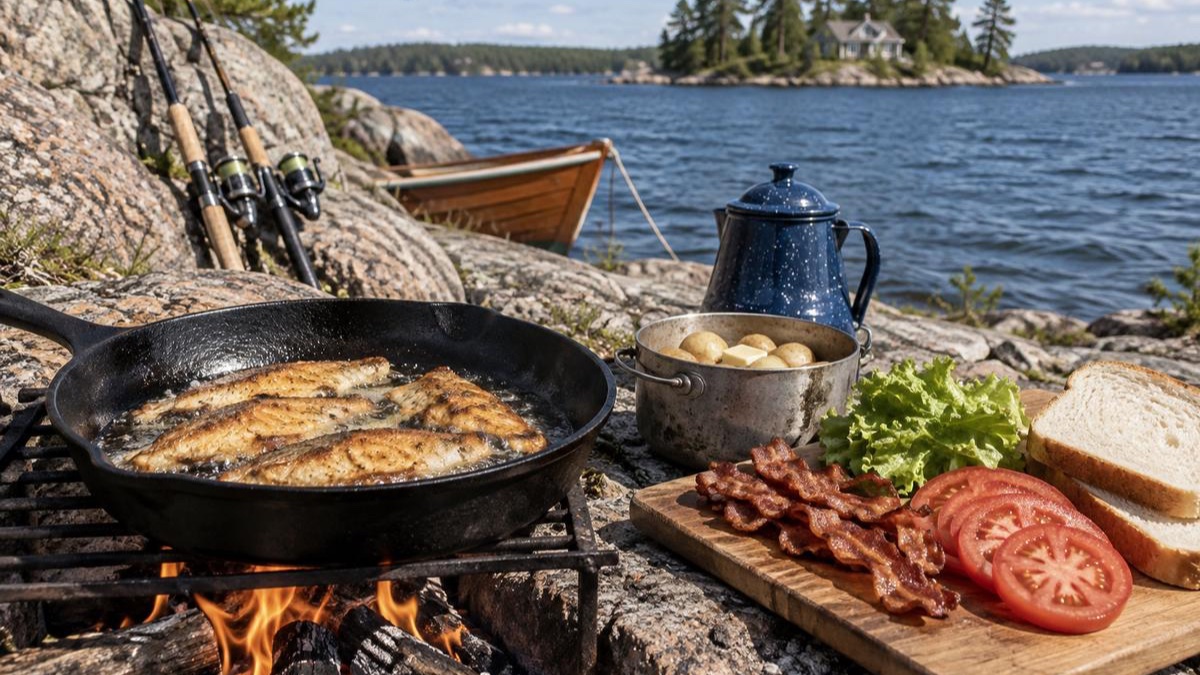 Illustration
“In winter the river goes quiet, the bays freeze over, and a whole second fishing season begins on top of the ice.”
What is ice fishing, and how does it work?
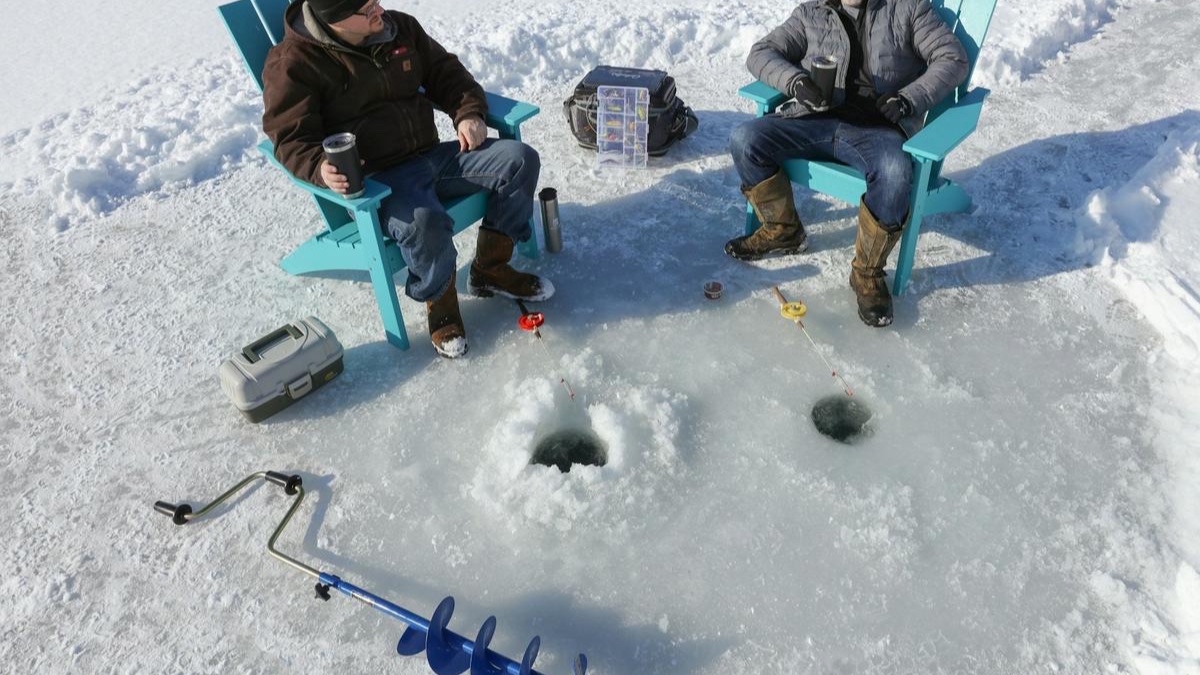
Ice fishing is exactly what it sounds like: once a lake or bay freezes thick enough to walk on, you drill a hole through the ice and fish through it. The fish are still down there, and in a sheltered St. Lawrence bay in midwinter they're often schooled up and hungry.
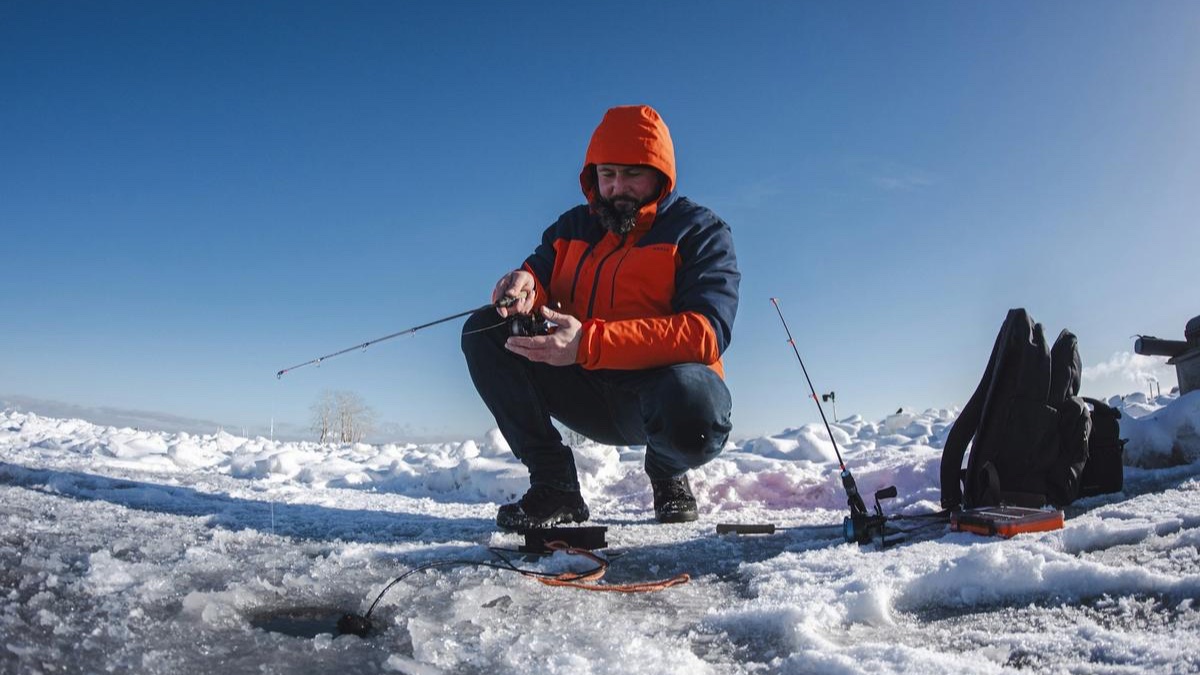
There are two basic ways to do it, and most people do both at once. Jigging means holding a short rod over the hole and working a small lure or a baited hook up and down to attract fish. It's how you catch perch and walleye, and it's the fun, hands-on part. Tip-ups are little flagged rigs that sit over a separate hole holding a live minnow under the ice. When a fish (usually a pike) takes the bait, a spring pops a bright flag up, and someone yells "Flag!" and runs.
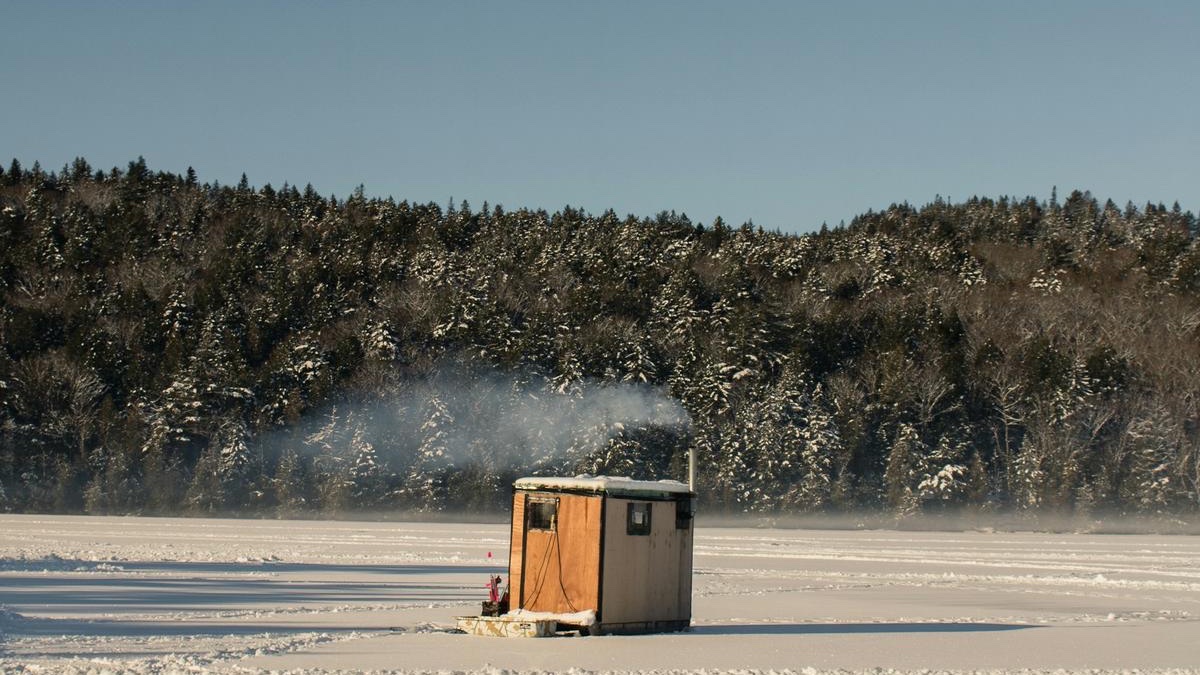
Many anglers fish from a shanty, also called an ice shack or shelter: a small portable or built hut that blocks the wind, often with a heater inside. Sitting in a warm shanty in your sweatshirt, watching a hole of dark water while snow blows across the bay outside, is the part of ice fishing nobody expects to love as much as they do.
When is ice fishing season on the St. Lawrence River?
It depends entirely on the winter. In a typical year, the protected bays around the Thousand Islands are fishable from about January into March. Some winters the ice comes early and stays thick; others it's late, thin or patchy. The main channel of the river, with its current and shipping lane, does not freeze safely, so ice fishing here is a bay game.
Yellow perch are the bread and butter through the ice, and they're open all year. Statewide the daily limit is 50, but in Jefferson County waters (Alexandria Bay, Clayton and Wellesley Island are all in Jefferson County) perch may be taken in any number. Northern pike and walleye are mixed in, and on the St. Lawrence their season has traditionally closed March 15. DEC proposed in early 2026 to move that closing date up to March 1 to better protect spawning fish, so check the current DEC regulations and the proposal details before a late-season trip.
Bays that local ice anglers have fished for years include Eel Bay and Lake of the Isles off Wellesley Island, Goose Bay, and Chippewa Bay downriver. DEC also points to bays near Cape Vincent, Clayton, Wellesley Island and Alexandria Bay as good winter pike water for tip-ups. Conditions on any of them change from week to week, which is exactly why first-timers are better off with someone who watches the ice all winter.
Pins are approximate locations for planning, not exact access points or safe-ice spots. Ice conditions change weekly; check locally before going out.
- 1Bonnie Castle Marina, Alexandria BayHome base for many Alexandria Bay guides, including Laurentian Tours (Boathouse 3). Fall charters leave from here.Open in Maps →
- 2Wellesley Island State ParkOpen year-round. Nature center trails for snowshoeing and cross-country skiing; ice fishing listed among winter activities.Park info →
- 3Eel Bay (Wellesley Island)A sheltered bay on the north side of Wellesley Island long fished through the ice for perch and pike.Open in Maps →
- 4Lake of the Isles (Wellesley Island)Protected water between Wellesley and Hill islands; a known largemouth spot in summer and a perch spot through the ice.Open in Maps →
- 5Goose BayA large bay downriver of Alexandria Bay that ice anglers check for perch.Open in Maps →
- 6Chippewa BayA classic winter bay for perch and northern pike on tip-ups. (St. Lawrence County: the 50-perch daily limit applies here.)Open in Maps →
- 7ClaytonRiver town upstream with nearby bays DEC notes for winter pike; good base for food and lodging.Open in Maps →
Is it safe to go ice fishing on the St. Lawrence River?
It can be very safe, if you respect the ice. It can also be deadly if you don't, and river ice deserves extra respect because current can thin it from underneath where you can't see it.
The New York State Department of Environmental Conservation's guidance is simple: four inches of solid, clear ice is usually safe for anglers on foot, and five inches is better for groups fishing together. White, cloudy or slushy ice is much weaker than clear ice, so you need more of it. Ice thickness varies from bay to bay and even within the same bay.
What do you need to go ice fishing? A complete checklist
Here's everything, split into what keeps you safe, what keeps you warm, and what catches fish. If you go with a guide, most of the fishing gear and the shanty are supplied, and you mainly bring yourself, warm clothes and a license.
How do I go ice fishing for the first time?
Go with a guide or an experienced friend. This is the single best piece of advice for a first trip. Someone who knows the ice and the bay eliminates the guesswork and the risk. A guided trip also means you don't have to buy an auger, a shanty and a sled before you even know whether you like it.
Pick a good day. A calm day in the teens or twenties with some sun is far more pleasant than a windy subzero morning. Watch the National Weather Service forecast for the region, and remember that wind matters more than the thermometer.
Start with perch. They're plentiful, they school up, and catching a bucket of them is easy and fun for kids. Jig a small lure tipped with a spike or a piece of minnow just off the bottom. When you feel a tap or see your rod tip twitch, lift.
Set a tip-up for pike. While you jig, a tip-up with a live minnow covers a second hole. Watching for the flag keeps everyone, especially kids, involved.
Know when to quit. If your feet or hands are going numb, or you're shivering, head in. It's supposed to be fun.
Can I try ice fishing with a guide in the Thousand Islands?
Yes. Several local guides run winter trips, and it's the easiest way in. Laurentian Tours, for example, runs four-hour guided ice fishing trips in the sheltered bays around Alexandria Bay when the ice is safe. Capt. Drake watches the ice all winter, picks the spot for the week, drills the holes, and has the shanty warm and the heater running when you arrive. Rods, tip-ups and bait are all supplied, he shows you how to jig and set tip-ups, and he cleans and bags your keepers at the end. You bring a New York fishing license, insulated waterproof boots, warm layers, a hat and gloves, and snacks and a thermos. If the ice isn't right, he reschedules.
Ice trips are priced by the trip, so call or text for dates and rates. Winter weekends fill up, so it's worth booking early once the bays start to freeze.
Do I need a fishing license to fish the St. Lawrence River?
Yes, if you're 16 or older, and that includes ice fishing. Kids under 16 fish free. You can buy a New York fishing license online from DEC. New York offers 1-day, 7-day and annual licenses for both residents and non-residents, so a visitor here for a weekend doesn't have to buy a full-year license.
Because the river is the U.S.-Canada border, fishing on the Canadian side of the line requires an Ontario license instead. Non-residents can buy an Ontario fishing licence online. Ice fishing happens in New York's own bays, so a New York license covers it; for boat trips, ask your guide which side of the line you'll be fishing. Crossing into Canada by boat, or landing on Canadian shore, also comes with border-reporting rules, so don't wander across without knowing them.
New York also holds a handful of free fishing days each year when no license is needed (all other rules still apply). In 2026 they were February 14 and 15, June 27 and 28, September 26, and November 11 (Veterans Day). See DEC's free fishing days announcement. DEC traditionally includes a February weekend, which makes an easy, free first try at ice fishing; watch for the 2027 dates.
What else is there to do in the Thousand Islands in fall and winter?
Plenty, and most of it is quiet, outdoorsy and beautiful.
Watch for bald eagles. DEC lists sections of the St. Lawrence River among New York's winter bald eagle viewing areas. Wintering eagles start arriving in December, numbers peak in January and February, and most head back to their nests by mid-March. Look near open water, ice edges and river islands, where they hunt fish, and bring binoculars: it's a federal offense to disturb them. Read DEC's eagle viewing tips.
Explore Wellesley Island State Park. The park stays open all year. In winter its Minna Anthony Common Nature Center trail system is used for snowshoeing and cross-country skiing, and the park lists ice fishing among its winter activities. Nature center hours shift after Columbus Day, so call the park at (315) 482-2479 before you go. Visit the Wellesley Island State Park page.
Take a fall boat ride. Before the boats come out of the water, a private sightseeing cruise past Boldt Castle, Heart Island and Millionaires' Row with the leaves turning is a very different experience from a packed summer tour boat. Laurentian Tours runs custom sightseeing trips on request.
Check the river before you drive up. ClickNNY's North Country webcams are a quick way to see conditions, and Visit 1000 Islands keeps a regional fishing overview for planning.
Where should I stay on Wellesley Island and around the Thousand Islands?
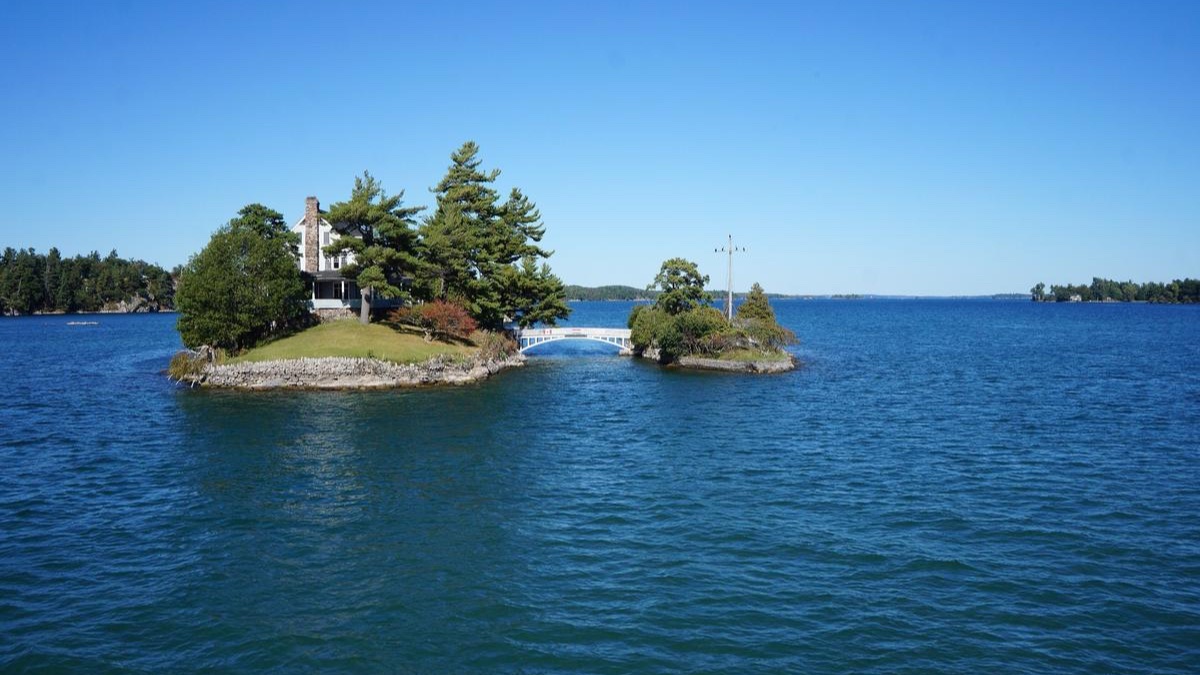
For an off-season fishing trip, a rental house beats a hotel room. You get a kitchen for the fish fry, room for everyone's gear, somewhere to dry boots and gloves, and often a view of the water. Wellesley Island, the big island in the middle of the river reached by the Thousand Islands Bridge, is a favorite base: it sits between Alexandria Bay and Clayton, close to both the state park and the bays where people fish through the ice.
There are lots of good homes for rent on the island, from cozy cottages to big family houses on the water. Browse Wellesley Island vacation rentals on Airbnb, or widen the search to Alexandria Bay and Clayton. Off-season rates are usually far lower than summer, and the views are just as good.
Off-season booking tip: before you book a winter stay, confirm the rental is winterized and heated, that the driveway is plowed, and that it's reachable by road all winter. Some island and waterfront cottages close for the season.
Quick answers: St. Lawrence fall and ice fishing
- When is the best time to fish the St. Lawrence River in the fall?
- October and November are prime. Musky fishing peaks then, northern pike and walleye bite well, and perch are good in September and October. The weather is colder, so dress in warm, waterproof layers.
- When does ice fishing season start in the Thousand Islands?
- Usually around January, lasting into March, depending on the winter. Only the sheltered bays freeze safely; the main river channel does not. Always confirm ice conditions before going out.
- How thick does ice need to be to ice fish?
- New York DEC says 4 inches of solid, clear ice is usually safe for anglers on foot, and 5 inches is better for groups. White or slushy ice is weaker, so you need more of it. Avoid moving water, inlets, outlets and docks with bubblers.
- What fish can you catch ice fishing on the St. Lawrence River?
- Mostly yellow perch, along with northern pike and walleye. Perch are open all year; pike and walleye have a closed season in spring, so check current DEC regulations for exact dates and size limits.
- What do I need for my first ice fishing trip?
- A fishing license (age 16 and up), insulated waterproof boots, warm non-cotton layers, a hat and mittens, ice cleats and ice picks, a short ice rod with small jigs, live bait, and an auger to drill holes. A guided trip supplies the gear, shanty and heater.
- Do I need a fishing license to ice fish in New York?
- Yes, anyone 16 or older needs a New York fishing license, available online from DEC in 1-day, 7-day and annual versions. New York's free fishing days are the exception, when no license is required.
- Can beginners go ice fishing on the St. Lawrence River?
- Yes. A guided trip is the easiest way: the guide checks the ice, drills the holes, supplies a heated shanty, rods and bait, and shows you how to jig and set tip-ups. Many first-timers and kids start this way.
- Can you keep a musky caught in the St. Lawrence River?
- Only if it's at least 54 inches long, with a limit of one per day on the New York side. That's why almost every musky caught on the river is released.
- Where can I stay for a fishing trip in the Thousand Islands?
- Wellesley Island, between Alexandria Bay and Clayton, is a popular base with many vacation homes for rent. In winter, confirm a rental is heated, winterized and plowed before booking.
Show us your catch
Caught a fall musky, a bucket of perch, or just a great sunrise on the ice? Share your St. Lawrence River photo and it may be featured here.
Summer will always be the Thousand Islands' busy season. But the people who know the river best will tell you its best-kept secret: when the crowds leave, the fishing gets better, the river gets quieter, and in the dead of winter the bays turn into a whole new place to explore. Come see it.
More from ClickNNY

Tell us what we missed
A farm stand we should visit, a little restaurant everyone needs to know, an overlook your family loves — send us your favorite photo and help this route grow. Maybe your road becomes our next road.
Editor’s note: Promotional partner: Laurentian Tours (Capt. Richard Drake), listed in the ClickNNY directory. Photos from laurentiantours.com used with permission; the shore dinner image is labeled as an illustration. Map pins are approximate. Regulations cited from NYSDEC tables as of October 2026; DEC's proposed March 1 pike/walleye closing date was not confirmed adopted at publication.